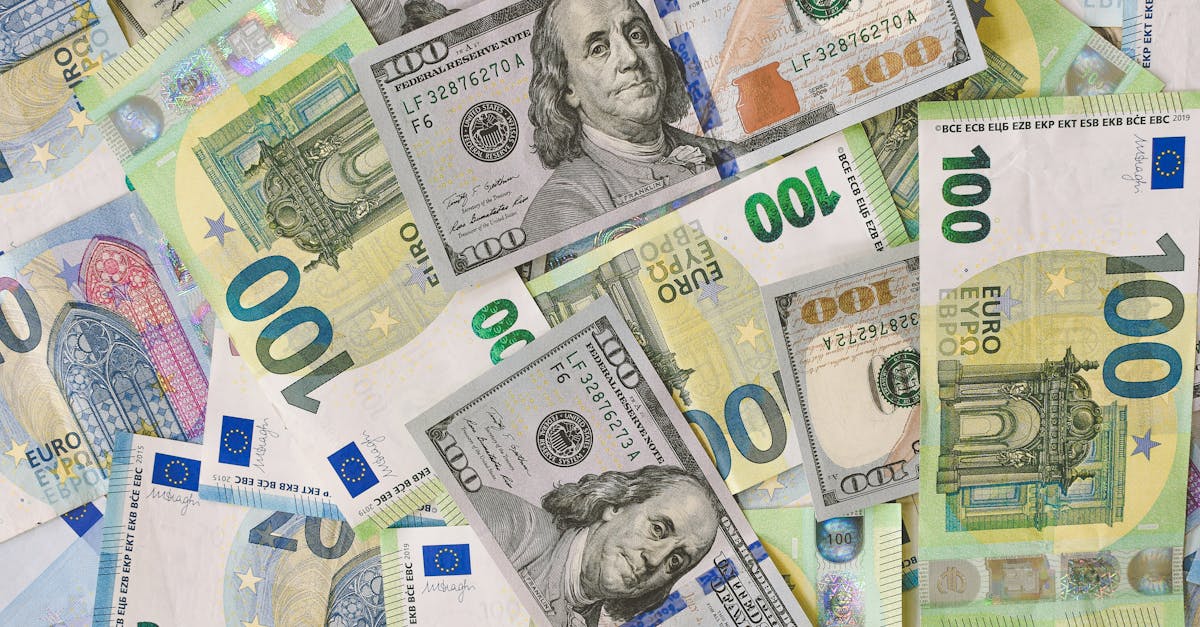
The idea of the U.S. dollar and the Euro reaching a 1:1 exchange rate, or ‘parity,’ often sparks intense debate in financial news. Headlines frequently frame it as a stark indicator of economic strength or weakness. But in my experience, focusing solely on this single number misses the much richer story beneath the surface. Parity is rarely a standalone event; it’s the culmination of complex macroeconomic forces, and understanding these forces is far more critical for investors than simply observing the exchange rate itself.
When I see the dollar and euro converging towards parity, I don’t just see a numerical milestone. I see a shift in trade dynamics, investment flows, and even the relative purchasing power for millions of businesses and individuals. It’s a signal that demands a deeper dive into the ‘why’ behind the numbers, rather than just reacting to the ‘what.’ My goal here is to unpack what a dollar-euro parity actually signifies, how it impacts different segments of the economy, and why its implications extend far beyond simple currency conversion.
Key Takeaways
- Dollar-euro parity is a symptom of deeper macroeconomic shifts, not merely a numerical milestone.
- A stronger dollar due to parity makes U.S. exports more expensive and imports cheaper, impacting trade balances.
- Investment flows often shift, favoring dollar-denominated assets when the dollar strengthens, attracting global capital.
- Parity can signal divergent economic policies between the U.S. and the Eurozone, particularly concerning interest rates.
- Energy prices, particularly oil, frequently show an inverse relationship with dollar strength, affecting global inflation.
Parity as a Symptom, Not the Disease Itself
The most common mistake I see when the dollar and euro approach parity is treating it as an isolated event. It isn’t. Currency exchange rates are like barometers, reflecting a multitude of pressures from the underlying economies. When the dollar strengthens significantly against the euro to reach parity, it’s typically a result of a few powerful drivers. The primary one is often a divergence in monetary policy, particularly interest rates. If the U.S. Federal Reserve is aggressively raising rates to combat inflation or to cool an overheating economy, while the European Central Bank (ECB) maintains a more dovish stance, global capital tends to flow toward the higher-yielding dollar-denominated assets. This increased demand for dollars naturally bids up its value.
Another significant factor is relative economic performance and outlook. If the U.S. economy shows more robust growth, lower unemployment, or greater resilience in the face of global headwinds compared to the Eurozone, investors will seek out U.S. assets, again increasing demand for the dollar. Conversely, if the Eurozone is grappling with energy crises, political instability, or slower post-pandemic recovery, the euro will likely weaken. For instance, in a period where Europe is facing a severe energy shortage driving up industrial costs, while the U.S. benefits from domestic energy production, that disparity will invariably be reflected in currency values. Parity, in this context, tells us less about the absolute health of either economy and more about their relative trajectories and policy responses.
Trade Balances Shift Under a Stronger Dollar
For businesses engaged in international trade, a dollar at parity with the euro has immediate and tangible effects. Consider a U.S. manufacturer exporting goods to Germany. When the dollar was weaker, say 1 euro bought 1.20 dollars, that manufacturer’s product priced at $100 would cost a German buyer approximately 83.33 euros. At parity, the same $100 product now costs the German buyer 100 euros. This makes U.S. exports more expensive and less competitive in the Eurozone market. In my experience, export-oriented U.S. companies often see a dip in international sales volumes or are forced to cut profit margins to remain competitive during periods of dollar strength.
Conversely, a strong dollar makes imports cheaper for U.S. consumers and businesses. A European product priced at 100 euros that once cost $120 now costs just $100 at parity. This can be a boon for U.S. importers, lowering their cost of goods sold and potentially translating to lower prices for consumers. For the everyday American, this might mean a slightly cheaper European car, luxury good, or imported food product. However, it also creates a competitive challenge for domestic U.S. producers who face increased price pressure from cheaper imports. This dynamic can influence inflation within the U.S. – cheaper imports can help temper rising prices, while reduced export competitiveness could impact domestic manufacturing jobs. It’s a double-edged sword that reshapes the global flow of goods and services.
Investment Flows Pivot Towards Dollar-Denominated Assets
When the dollar strengthens to parity against the euro, global investors take notice. The mechanics are straightforward: a stronger dollar means that any returns generated from dollar-denominated assets, when converted back to other currencies, will be worth more. This creates a powerful incentive for global capital to flow into U.S. markets, particularly into assets like U.S. Treasury bonds, corporate debt, and even certain equities.
From my perspective managing portfolios, this phenomenon is often driven by a ‘safe haven’ appeal. During times of global uncertainty or economic stress in other regions, the U.S. dollar is frequently seen as the most reliable store of value. Add to that higher U.S. interest rates compared to the Eurozone, and the attraction intensifies. European investors, for example, might find U.S. bond yields more appealing, or they might seek U.S. stocks if they perceive the U.S. economy as offering better growth prospects. This influx of foreign capital can actually reinforce dollar strength, creating a self-fulfilling cycle. While beneficial for the demand for U.S. assets, it can also lead to increased volatility in other currency markets and potentially siphon investment away from regions with weaker currencies, further exacerbating their economic challenges. It’s a clear signal of where the smart money believes stability and returns are currently located.
Energy Prices Show a Nuanced Relationship
The relationship between a strong dollar and commodity prices, especially energy, is often inverse and complex. Oil, being the world’s most traded commodity, is typically priced in U.S. dollars. When the dollar strengthens to parity with the euro, it means that for countries outside the U.S., purchasing oil becomes more expensive in their local currency. For a European nation, for example, 100 euros might now buy significantly less oil than it did when the euro was stronger. This effectively acts as a price increase for oil in non-dollar economies, even if the dollar-denominated price of oil remains stable or even declines slightly.
In my experience, strong dollar periods can sometimes put downward pressure on the dollar-denominated price of oil itself. If a strong dollar indicates weakening global growth (as it can if it’s driven by a ‘risk-off’ flight to safety), then demand for oil might fall, leading to lower prices. However, if dollar strength is primarily due to U.S. interest rate hikes without a significant global slowdown, the impact can be different. The key takeaway here is that a strong dollar at parity exacerbates energy cost challenges for Eurozone nations and other countries reliant on dollar-priced imports. This can fuel inflation abroad, even as it potentially offers some pricing relief within the U.S. It’s a critical element in understanding the global ripple effects of currency movements, and it’s why I always pay close attention to this dynamic.
Divergent Monetary Policy and Inflation Pressures
As previously touched upon, one of the most prominent reasons for a move to dollar-euro parity is often a clear divergence in monetary policy between the U.S. Federal Reserve and the European Central Bank. If the Fed is raising interest rates aggressively to cool inflation, while the ECB maintains lower rates, the yield differential makes dollar-denominated assets more attractive. This draws capital into the U.S., strengthening the dollar. But the implications go deeper than just capital flows.
This divergence can either amplify or dampen inflation pressures in each region. For the U.S., a stronger dollar makes imports cheaper, which can help to offset domestic inflation by reducing the cost of imported goods. This effect is crucial, as the U.S. imports a significant volume of consumer goods. However, for the Eurozone, a weaker euro means imports (including essential commodities like energy) become more expensive in local currency terms, exacerbating their inflation problems. This creates a challenging situation for the ECB, which may then face pressure to raise rates to defend its currency and combat imported inflation, even if its underlying economic conditions might not otherwise warrant such tightening. This policy tug-of-war highlights how currency parity is not just a reflection of economic conditions but also a powerful channel through which economic policy in one region impacts the other, creating a complex feedback loop for inflation.
Frequently Asked Questions
What does it mean when the dollar and euro reach parity?
It means that one U.S. dollar can be exchanged for exactly one euro. While it’s a symbolic milestone, its significance lies in the underlying economic and monetary forces that caused the currencies to reach this 1:1 exchange rate.
Is dollar-euro parity good or bad for the U.S. economy?
The impact is mixed. A stronger dollar (leading to parity) makes U.S. imports cheaper, which can help reduce inflation for consumers. However, it makes U.S. exports more expensive and less competitive on the global market, potentially hurting export-oriented industries and their employment.
How does dollar-euro parity affect European economies?
For Eurozone countries, a weaker euro (leading to parity) makes their exports cheaper and more competitive, potentially boosting trade. However, it makes imports, especially essential commodities like oil and gas, more expensive in local currency, which can worsen inflation within the Eurozone.
Does dollar-euro parity affect my investment portfolio?
Potentially, yes. If you hold U.S. dollar-denominated assets, a stronger dollar means those assets may yield higher returns when converted back to a weaker currency. Conversely, if you hold Euro-denominated assets, their value may decrease when converted to a stronger dollar. It also influences the competitiveness of multinational corporations depending on their revenue sources and operational costs.
What typically causes the dollar and euro to reach parity?
Parity is often driven by a combination of factors, including divergent monetary policies (e.g., the U.S. Federal Reserve raising interest rates more aggressively than the European Central Bank), stronger economic growth prospects in one region over the other, or a ‘safe haven’ flow of capital into the dollar during times of global uncertainty.
Will dollar-euro parity last long?
Currency markets are constantly in flux, influenced by economic data, policy announcements, geopolitical events, and market sentiment. While parity can persist for some time, it is not inherently a stable equilibrium. Exchange rates tend to fluctuate as underlying economic conditions and policies evolve.
In essence, currency parity is a complex economic signal, not a simple headline. It compels us to look beyond the number and delve into the intricate dance of global monetary policies, trade dynamics, and investment flows. Understanding these underlying mechanisms is crucial for any investor seeking to navigate the actual workings of the market. The next time you hear about dollar-euro parity, remember it’s an invitation to explore the deeper story, not just to react to the surface-level event.